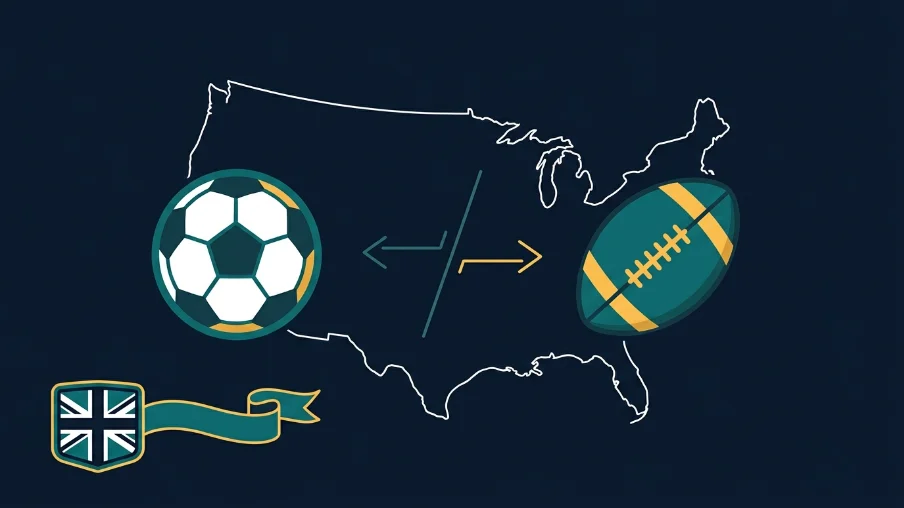
Quick Answer: America calls it soccer because the word “football” was already firmly attached to American football, a distinct, hugely popular sport with its own dedicated leagues, by the time association football gained traction in the US. “Soccer” was borrowed from British slang to avoid confusion between the two sports.
Every four years, American sports fans get into the same debate: why does the rest of the world call it football, while the United States insists on soccer? It’s often assumed to be a simple case of American stubbornness or cultural isolation, but the real explanation is rooted in something far more practical a naming conflict that had already been solved decades before soccer became popular in the US at all, long before international broadcasting or global sports media even existed in their modern form.
This guide walks through exactly why is it called soccer in America, tracing the term back to its surprising British origins and explaining why the US never fully switched to “football” the way most of the rest of the world eventually did over the course of the 20th century.
The Term “Soccer” Didn’t Start in America
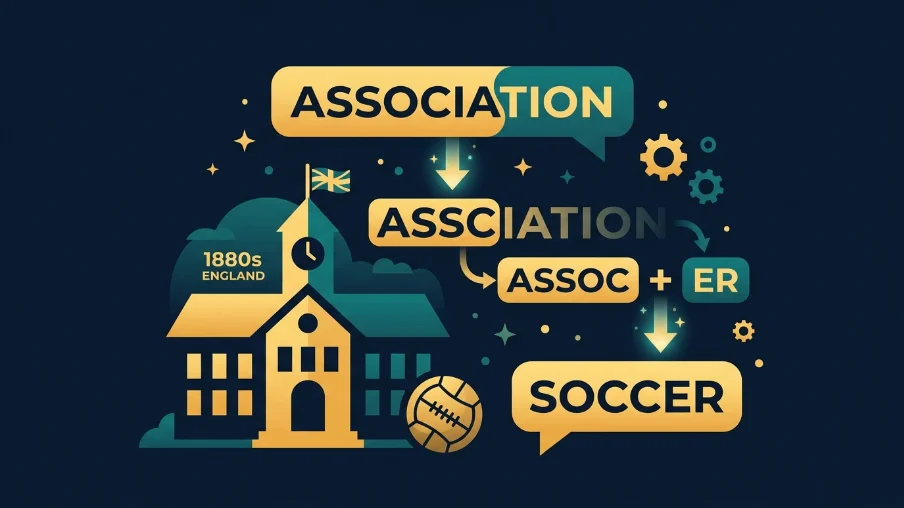
Here’s the detail that surprises most people: the word “soccer” is not an American invention at all. It was coined in England in the 1880s, decades before the term became closely associated with the United States. At the time, English private schools played multiple codes of football, including “association football” (played primarily with the feet) and “rugby football” (which allowed handling and tackling). Students shortened “association” using a common slang pattern of the era, turning it into “assoccer,” and eventually just “soccer.” For much of the following century, both “football” and “soccer” were used interchangeably in Britain itself, appearing side by side in newspapers, radio broadcasts, and everyday conversation.
Why America Needed a Different Word
By the time association football started gaining any real following in the United States in the late 1800s and early 1900s, the word “football” was already spoken for. American football, evolved from rugby-style college games, had already become an enormously popular sport across US universities and, later, professional leagues, with dedicated stadiums, media coverage, and a passionate fan base of its own. Using “football” for both sports would have created constant confusion in everyday conversation, in newspapers, and eventually in radio and television broadcasting.
Rather than inventing a new term from scratch, American sports organizations and media adopted “soccer” a word the English themselves had already coined and were still using at the time to specifically refer to association football. This wasn’t a rejection of the sport or an attempt to Americanize it; it was simply the most convenient existing option available at the time.
Canada and Australia Faced the Same Naming Problem
The United States isn’t alone in this naming choice. Canada uses “soccer” for the same reason America does Canadian football, a distinct sport with its own set of rules and history dating back to the 19th century, already occupied the word “football” domestically. Australia followed a similar path, since Australian rules football, a completely different sport with deep cultural roots and a massive following of its own, had already claimed the term “football” in everyday Australian usage. In all three countries, the practical need to distinguish between multiple football codes, rather than any dismissal of association football itself, drove the adoption of “soccer” as the clearer, less ambiguous term.
When Did “Soccer” Become the Dominant American Term?
Soccer’s terminology in America solidified gradually rather than through any single official decision. As American football’s popularity grew through the 20th century, particularly following the rise of the NFL after World War II, “football” became almost exclusively associated with the gridiron sport in American media and everyday language. By the time the North American Soccer League launched in 1968, and later Major League Soccer in 1996, “soccer” was already the fully established, unambiguous term for association football across American sports coverage, education, and youth leagues nationwide.
Is America the Only Country That Says Soccer?
No. While the United States is the most prominent example, several other English-speaking countries use “soccer” for the same structural reason they already have their own distinct sport called football, making “soccer” the more practical, less confusing everyday choice:
- United States due to American football
- Canada due to Canadian football
- Australia due to Australian rules football
- Ireland (in some contexts) to distinguish from Gaelic football, though “football” is also widely used there
Why “Football” Is Now Making a Comeback in American Media
Interestingly, “football” has started appearing more frequently in American sports coverage in recent years, particularly around major international tournaments and high-profile European club matches broadcast to US audiences. This shift has accelerated following the United States co-hosting the 2026 FIFA World Cup alongside Canada and Mexico, which has significantly increased mainstream exposure to global football terminology and international broadcasting conventions. Major American sports networks and streaming platforms covering international competitions increasingly use “football” in formal contexts, even while “soccer” remains the default term in everyday American conversation and domestic league coverage. Younger American fans, exposed heavily to global football content through streaming and social media, also appear more comfortable using “football” interchangeably with “soccer” than previous generations were.
Soccer vs Football Terminology: US Context
| Term | Used For | Common Context in the US |
| Football | American football (NFL, college football) | Everyday American conversation, major domestic sport |
| Soccer | Association football (MLS, international) | Everyday American conversation, youth leagues, domestic soccer coverage |
| Football (occasionally) | Association football | International broadcasts, FIFA-related coverage, growing usage post-2026 World Cup among younger fans |
The Growth of Soccer in American Sports Culture
Soccer’s journey in the United States has been unusual compared to most other major footballing nations, largely because it developed as a participation sport for children and youth leagues well before it became a significant spectator sport. By the 1980s and 1990s, youth soccer participation numbers in the US had grown dramatically, driven partly by the sport’s accessibility, lower equipment costs, and lower injury risk compared to American football. This created a generation of Americans who grew up playing soccer themselves, even if the sport remained secondary to American football, basketball, and baseball in terms of professional-level media coverage and cultural prominence throughout much of the 20th century.
The 1994 FIFA World Cup, hosted by the United States, is widely credited as a turning point, introducing large-scale American audiences to top-level international soccer and setting the stage for Major League Soccer’s launch two years later in 1996. Since then, soccer’s popularity in the US has grown steadily, accelerated by the increasing number of European club matches broadcast on American television and streaming platforms.
How American Media Has Shaped Soccer Terminology
Sports broadcasters and journalists have played a significant role in reinforcing “soccer” as the standard American term. Major US sports networks historically categorized their coverage using “soccer” to clearly distinguish it from NFL and college football programming, a practical decision driven by scheduling, advertising, and audience targeting rather than any broader cultural statement about the sport itself. This terminology has been reinforced for decades through ESPN, Fox Sports, and other major broadcasters, embedding “soccer” deeply into how the sport is discussed, marketed, and taught in American schools and youth programs. Even as international broadcasts increasingly use “football” during major tournaments, domestic MLS coverage and youth league branding across the country continue to rely almost exclusively on “soccer” terminology.
Common Myths About Why America Says Soccer
- Americans invented the word to be different.” False the term was coined in England, not the US, decades before it became closely associated with American sports culture and everyday conversation.
- Soccer is considered a lesser sport in America because of the name.” False the naming choice reflects a practical need for distinction, not a value judgment about the sport’s status, popularity, or legitimacy compared to American football.
- “The name will officially change soon.” Unlikely in the near term while “football” is appearing more frequently in international broadcast contexts, “soccer” remains deeply embedded in American youth leagues, media, and everyday conversation across generations.
- Soccer and football have different rules in America.” False American soccer follows the same IFAB Laws of the Game used internationally, with identical rules regardless of the terminology used to describe it in a given country.
Frequently Asked Questions
Why is it called soccer in America instead of football? Because “football” was already used for American football, a separate and hugely popular sport with its own dedicated fan base, so “soccer” a term originally coined in England was adopted to avoid confusion between the two.
Did Americans invent the word soccer? No. The word “soccer” was coined in England in the 1880s as slang shortened from “association football,” long before it became closely associated with the United States or American sports media.
Do other countries call it soccer besides America? Yes. Canada and Australia also commonly use “soccer,” for the same reason as the US both countries have their own separate, well-established sports also called football.
Will America eventually switch to calling it football? It’s possible over time, especially with football’s rising popularity in the US following the 2026 World Cup and decades of steady youth participation growth, but “soccer” remains deeply embedded in American sports culture and is unlikely to disappear soon.
Is FIFA involved even though Americans call it soccer? Yes. Regardless of local terminology, the sport is governed globally by FIFA, and the US Soccer Federation is FIFA’s officially recognized governing body for the sport in the United States, responsible for national team competitions and domestic development programs.
When did soccer become popular enough in the US to need its own name? Association football began gaining a following in the US in the late 1800s and early 1900s, but the “soccer” terminology solidified more firmly through the 20th century as American football’s popularity grew.
What role did the 1994 World Cup play in American soccer culture? Hosting the 1994 FIFA World Cup is widely seen as a major turning point for soccer in the US, introducing large audiences to top-level international soccer and helping pave the way for Major League Soccer’s launch in 1996.
Does the US Soccer Federation use the word “soccer” officially? Yes, the sport’s official governing body in the United States is named the US Soccer Federation, reflecting the term’s deeply established, official status within American sports administration.
Conclusion
So, why is it called soccer in America? Not because of stubbornness or a rejection of global convention, but because of a simple, practical naming conflict that had already been resolved elsewhere decades before American soccer culture took shape. The word “soccer” itself is a British invention, borrowed by the US, Canada, and Australia purely to keep two very different sports from being confused with each other. As football’s global profile continues to rise in the United States, particularly after co-hosting the 2026 World Cup and decades of steady growth since the 1994 tournament, don’t be surprised if “football” starts appearing more often even if “soccer” isn’t going anywhere soon. Want to understand the full global picture?
Check out our guide on Football vs Soccer: What’s the Real Difference for a broader international comparison.