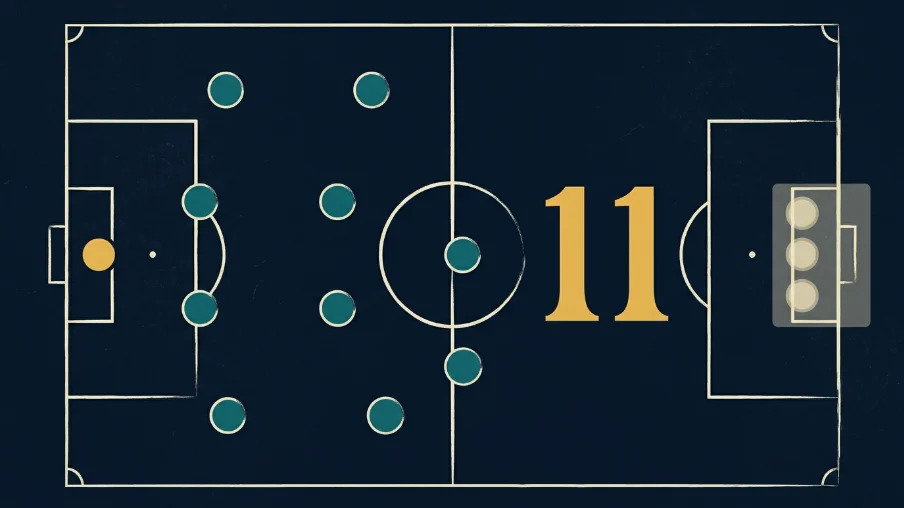
Quick Answer: A football team has 11 players on the pitch at a time, including one goalkeeper. Including substitutes, a match-day squad typically includes 18 to 26 players depending on the competition, while a full club squad for a season is usually much larger.
It’s one of the first questions any new football fan asks, and the answer seems simple enough until substitutes, red cards, and squad rules enter the conversation. A match-day squad, a starting lineup, and a full club roster are three very different numbers, and mixing them up is one of the most common points of confusion for people new to the sport, especially when transfer news or squad announcements reference numbers that don’t match what’s actually on the pitch during a match.
This guide breaks down exactly how many players are in a football team on the pitch, on the bench, and across a full club roster, cross-checked against official IFAB and FIFA regulations rather than casual assumptions often repeated across fan forums and social media.
How Many Players Are on the Pitch During a Match?
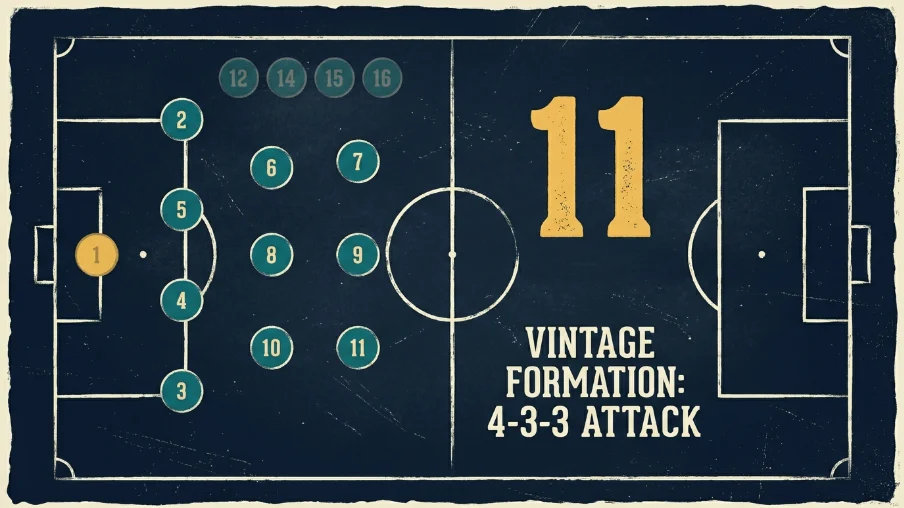
Each football team fields 11 players at the start of a match, including one goalkeeper and 10 outfield players. This has been the standard number under the IFAB Laws of the Game since football’s rules were first formalized in the 1800s, and it applies across virtually all top-level competitions worldwide, from the Premier League to the FIFA World Cup, regardless of the country, climate, or level of competition involved.
Of these 11 players, exactly one must be the designated goalkeeper the only player permitted to use their hands, and only within their own penalty area. The remaining 10 outfield players are distributed across defensive, midfield, and attacking positions, based on whatever formation the team’s coach has selected for that particular match.
What Happens If a Team Has Fewer Than 11 Players?
A team can play with fewer than 11 players, most commonly due to a red card reducing their numbers during a match, though injuries with no remaining substitutes can also force a team below full strength. However, there is a legal minimum: under IFAB rules, a match cannot start or continue if a team has fewer than 7 players. If a team drops below this threshold, due to multiple red cards or serious injuries with no remaining substitutes, the match is abandoned by the referee.
Match-Day Squad Size: How Many Substitutes Are Allowed?
Beyond the 11 starting players, teams also name a group of substitutes who can be brought on during the match to replace tired, injured, or tactically underperforming players. The number of allowed substitutes has changed significantly over the years and varies by competition:
- Historically, most professional leagues allowed just 3 substitutions per match for decades, a rule that remained largely unchanged from the 1990s through the late 2010s.
- Following rule changes introduced during the COVID-19 pandemic, IFAB permanently adopted a 5-substitution allowance in many top competitions, given how well it worked for player welfare and squad rotation across a demanding fixture calendar.
- Match-day squads in major competitions like the FIFA World Cup typically include 23 to 26 total players, meaning 12 to 15 substitutes are available on the bench beyond the starting 11, giving coaches significant tactical flexibility.
- Domestic league matches often allow a bench of 7 to 12 substitutes, depending on the specific league’s regulations and broadcasting agreements.
This means that while only 11 players are on the pitch at kickoff, the total number of players “in the team” for a single match day is usually closer to 18 to 26 once substitutes are properly included.
Full Club Squad Size: How Many Players Total?
Beyond a single match-day squad, professional football clubs maintain a much larger overall roster across an entire season, made up of players who rotate in and out of the starting lineup depending on form, fitness, and tactical needs. Top-flight clubs typically carry:
- 20 to 30 senior first-team players registered for domestic league competition
- Additional players registered for continental competitions like the Champions League, sometimes with different squad list rules
- Youth academy and reserve team players who are not part of the main first-team squad but may be called up during the season to cover injuries or suspensions.
Squad size regulations vary by league for example, some competitions impose a maximum senior squad size or require a minimum number of “homegrown” players to be included on the official registered list.
Football Squad Sizes: Quick Comparison
| Level | Players on Pitch | Match-Day Squad | Full Season Roster |
| Professional (domestic league) | 11 | 18–20 | 20–30 |
| FIFA World Cup | 11 | 23–26 | N/A (tournament squad only) |
| Youth/Grassroots (standard) | 11 | Varies, often smaller | N/A |
| 5-a-side/Futsal | 5 | Varies | N/A |
Why Is 11 Players the Standard Number?
The number 11 wasn’t arbitrarily chosen it emerged organically from football’s early formalization in 19th-century England, where school and club matches often varied wildly in player count until The Football Association standardized the rules in 1863.
Eleven-a-side became the accepted norm largely because it balanced enough players to cover the pitch effectively without making the game overly congested, a balance that has held up remarkably well for over 150 years without any serious push to change it at the top level of the sport.
Do All Forms of Football Use 11 Players?
Not every version of the sport uses the traditional 11-a-side format. Several popular variants use significantly fewer players, often to fit smaller playing spaces or to emphasize faster-paced, more technical gameplay:
- Five-a-side football uses 5 players per team, typically played on a smaller indoor or outdoor pitch.
- Futsal, football’s official indoor variant recognized by FIFA, also uses 5 players per team, including a goalkeeper.
- Seven-a-side and nine-a-side formats are common in youth football development programs, allowing younger players more touches on the ball and space to develop technically before transitioning to the full 11-a-side game.
How Youth Football Adjusts Player Numbers
Many football associations recommend smaller-sided formats for younger age groups specifically to support skill development and confidence on the ball. A typical youth football pathway might look like this:
- Under-7 to Under-8: 5-a-side or 7-a-side
- Under-9 to Under-10: 7-a-side or 9-a-side
- Under-11 to Under-12: 9-a-side
- Under-13 and above: Full 11-a-side football
This gradual scaling reflects growing consensus among football development experts that smaller-sided games give young players significantly more contact with the ball and more decision-making opportunities per match, compared to placing them directly into a full 11-a-side format too early.
How Player Numbers Have Evolved Historically
Before the Football Association standardized the rules in 1863, matches in England were played with wildly inconsistent numbers of players some historical accounts describe school matches with 15, 20, or even more players per side, often making organized, structured play nearly impossible on a standard-sized pitch. As association football spread and became more competitive, the 11-a-side format became the practical standard, balancing enough coverage of the pitch with a manageable, organized style of play. Since then, the core number has remained essentially unchanged at the professional level, even as nearly every other aspect of the sport from equipment to tactics to officiating has evolved dramatically over the past century and a half.
Notable Exceptions and Unusual Player-Count Situations
While 11-a-side remains the standard, football has seen a handful of unusual situations involving player numbers over the years that highlight just how strict these regulations actually are:
- Matches have occasionally been abandoned due to teams dropping below the legal 7-player minimum following multiple red cards, a rare but memorable occurrence in professional football history.
- Some lower-league and amateur competitions occasionally permit matches to continue with fewer than 11 players per side from kickoff if a team cannot field a full squad, though this varies significantly by league and region.
- Disability football variants, including 5-a-side blind football recognized by the International Blind Sports Federation, use significantly modified player counts and rules tailored to accessibility.
Squad Registration Rules Across Different Competitions
Different competitions impose their own specific regulations on how many players a club can register, beyond simply how many appear on a match-day team sheet. For example, UEFA competitions like the Champions League require clubs to submit an official squad list with restrictions on the number of players and specific rules around “locally trained” players, designed to encourage academy development across member associations. Domestic leagues often have separate regulations entirely, sometimes including salary cap-style restrictions that indirectly influence how large a competitive squad a club can realistically maintain across a full season without breaching financial regulations.
Frequently Asked Questions
How many players are in a football team on the pitch? Each team has 11 players on the pitch at a time, including one goalkeeper and 10 outfield players.
How many substitutes are allowed in football? Most professional competitions now allow 5 substitutions per match, though the total bench size on a match-day squad can range from 7 to over 15 players depending on the competition.
What is the minimum number of players a football team can have? Under IFAB rules, a match cannot continue if a team has fewer than 7 players on the pitch.
How many players are in a full football club squad? Professional clubs typically carry 20 to 30 senior players in their full-season roster, in addition to youth and reserve team players.
How many players are on a 5-a-side football team? Five-a-side football teams field 5 players each, including a goalkeeper, typically on a smaller pitch than standard 11-a-side football.
Why do youth football teams sometimes play with fewer than 11 players? Smaller-sided formats like 5-a-side, 7-a-side, and 9-a-side are used in youth football to give young players more touches on the ball and better opportunities to develop core skills.
How many players does a World Cup squad have? FIFA World Cup squads typically include 23 to 26 total players per nation, though the exact number can vary by tournament regulations.
Has the number of players on the pitch ever changed in football history? No, 11-a-side has remained the standard for professional football since the rules were formalized in 1863, even as substitution rules and squad sizes have changed considerably over the decades.
Why do some leagues limit the number of substitutes on the bench? Substitute limits help balance player welfare and squad rotation with competitive fairness, preventing wealthier clubs with larger squads from gaining an outsized advantage simply through squad depth alone.
Conclusion
So, how many players are in a football team? On the pitch, the answer is always 11 but as this guide shows, that’s really just the starting point. Between substitutes, match-day squads, and full club rosters, the total number of players involved in a team can range from a strict minimum of 7 to well over 25 once an entire season’s roster is considered, with youth football adjusting these numbers further to support player development.
Understanding these different layers makes it much easier to follow squad announcements, substitution rules, and roster news throughout the football season. Want to understand more of the basics? Check out our guide on Football Fouls and Cards for the complete rules breakdown.

Daniel Brooks is a sports writer at SportsOrbitX.com, specializing in football, basketball and global sports news. He focuses on delivering accurate reporting, match analysis and timely updates that keep fans informed.