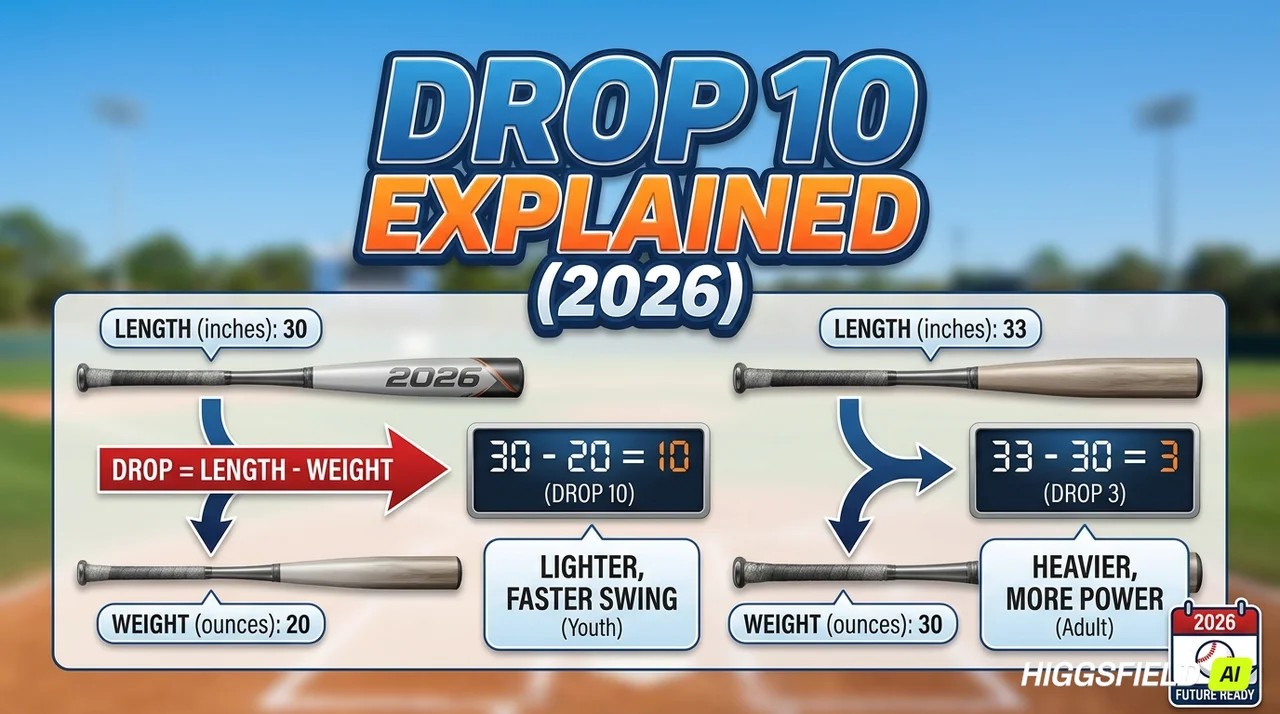
Quick Answer: Drop 10 on a baseball bat means the bat’s weight in ounces is 10 less than its length in inches. For example, a 30-inch drop 10 bat weighs 20 ounces (30 minus 10), a lighter, faster-swinging bat commonly used by younger or developing players.
Walk into any youth baseball equipment aisle and you’ll see the same confusing number stamped on bat after bat: -8, -10, -12, sometimes even -13. For parents shopping for their first bat, or new players trying to understand why their coach keeps mentioning “drop weight,” the number can feel like a secret code rather than useful information that actually helps with the buying decision.
This guide explains exactly what does drop 10 mean on a baseball bat, how the drop weight formula works, why it matters for player performance, and how to choose the right drop weight for different ages, skill levels, and physical strength.
The Drop Weight Formula Explained
Drop weight, often written as “drop” or with a minus sign, is calculated with a simple formula: length in inches minus weight in ounces equals the drop number displayed on the bat itself. A bat’s “drop” tells you how light or heavy it feels relative to its length, rather than describing its actual weight in isolation from its size. For example:
- A 30-inch bat weighing 20 ounces has a drop of 10 (30 – 20 = 10)
- A 32-inch bat weighing 22 ounces has a drop of 10 (32 – 22 = 10)
- A 30-inch bat weighing 22 ounces has a drop of 8 (30 – 22 = 8)
This means two bats can share the same drop number while having different actual lengths and weights, which is why understanding the formula itself matters more than memorizing a single number.
Why Drop Weight Matters for Player Performance
The drop number directly affects how a bat feels and swings, which has a meaningful impact on a player’s timing, bat speed, and overall performance at the plate throughout a game. A higher drop number (like -10 or -12) means a lighter bat relative to its length, generally allowing for a faster swing speed, which is particularly valuable for younger or smaller players still developing strength and bat control at the plate. A lower drop number (like -3, used in most high school and college baseball) means a heavier bat relative to its length, which can generate more power on contact but requires greater strength and more developed swing mechanics to control effectively without sacrificing bat speed.
Drop 10 vs Other Common Drop Weights
| Drop Weight | Typical Bat Feel | Common Age Group |
|---|---|---|
| Drop 13 | Lightest, fastest swing | T-ball, ages 4-7 |
| Drop 11 to 10 | Light, quick swing | Youth, ages 8-10 |
| Drop 8 | Moderate weight | Ages 10-12 |
| Drop 5 | Heavier, more power | Ages 12-14 |
| Drop 3 | Heaviest (standard) | High school and college |
Is Drop 10 Right for Every Youth Player?
Not necessarily. While drop 10 is a common choice for many youth leagues, the right drop weight depends on a specific player’s age, strength, height, and swing mechanics rather than a single universal recommendation applied to every child. A player who struggles to control a drop 10 bat may actually perform better with a lighter drop 11 or drop 12, prioritizing bat speed and control over the slightly increased mass and potential power. Conversely, a stronger or more advanced player in the same age group might already be ready to transition to a drop 8 or drop 5 bat, since an appropriately challenging bat weight can help continue developing power and proper swing mechanics as skills progress over subsequent seasons.
How League Rules Affect Drop Weight Choices
Many youth baseball leagues, including those governed by USA Baseball, USSSA, and Little League, impose specific bat regulations that can influence which drop weights are permitted at different age levels and divisions. Some leagues restrict the minimum drop weight allowed for certain age divisions, partly to ensure competitive balance and partly to address safety concerns around excessively lightweight, high-swing-speed bats at younger ages of play. Parents and coaches should always verify their specific league’s current bat regulations before purchasing, since certification requirements and permitted drop weights can vary considerably between different youth baseball and softball organizations across regions.
How to Choose the Right Drop Weight
Selecting an appropriately weighted bat involves balancing several factors beyond simply matching a player’s age to a general recommendation chart. Coaches and equipment specialists commonly suggest a simple test: a player should be able to hold the bat straight out horizontally with one arm for several seconds without significant strain or the bat drooping noticeably. If a player struggles significantly with this test, a lighter drop weight (a higher negative number) is likely more appropriate, even if it falls outside the “typical” range suggested for their specific age group.
Drop Weight vs. Swing Weight: An Important Distinction
While drop weight is the most commonly referenced number when shopping for a bat, it’s worth understanding that it doesn’t tell the complete story of how a bat actually feels during a swing. Two bats with an identical drop weight can still feel noticeably different depending on how the weight is distributed along the barrel, a factor often referred to as “swing weight” or balance point. A bat with more weight concentrated toward the end cap will generate more power on contact but feel harder to control through the swing, even if its overall drop number matches a lighter-feeling, more evenly balanced bat. This is part of why two players with similar strength and age might genuinely prefer different bats sharing the exact same drop weight.
How Bat Material Affects the Drop Weight Experience
The material a bat is constructed from also meaningfully influences how a given drop weight feels and performs in practice. Composite bats, built from layered carbon fiber materials, tend to concentrate more weight toward the barrel end, creating a different swing feel compared to a traditional aluminum alloy bat with the same drop weight. Hybrid bats, combining a composite barrel with an aluminum handle, aim to balance the power benefits of composite materials with the more consistent, predictable feel aluminum bats are generally known for. Understanding these material differences helps explain why simply matching a drop weight number isn’t always sufficient when selecting the right bat, since the underlying construction can shift how that same numerical drop actually performs during an at-bat.
Common Misconceptions About Drop Weight
- A lower drop number always means a better bat.” False — the ideal drop weight depends entirely on a specific player’s strength and swing mechanics, not a universal ranking of quality.
- “Drop weight is the same as total bat weight.” False — drop weight is a relative measurement comparing length to weight, not an absolute weight figure on its own.
- “All drop 10 bats feel identical.” False — swing weight, balance point, and material construction can make two bats with the same drop feel quite different in the hands of a player.
- “Players should switch to a lower drop number as soon as possible.” False — moving to a heavier relative bat too early can actually slow bat speed and hurt a player’s swing development if strength hasn’t caught up yet.
Common Mistakes Parents Make When Choosing Drop Weight
Beyond simply matching age to a general drop weight chart, several recurring mistakes can lead to a poorly fitted bat that hinders rather than helps a young player’s development at the plate. Buying a bat “to grow into,” selecting a heavier, lower drop number than currently appropriate in hopes of extending the bat’s useful life, often backfires by forcing a player to develop compensating swing habits that can be difficult to correct later. Similarly, prioritizing a bat’s brand reputation or price point over an honest assessment of the player’s current strength and control frequently results in a mismatch that affects confidence and performance far more than any marginal difference in bat technology or materials would. Coaches and youth hitting instructors consistently emphasize that a properly fitted, appropriately weighted bat matters considerably more for a developing player’s progress than premium materials or a heavier relative weight purchased prematurely.
Frequently Asked Questions
What does drop 10 mean on a baseball bat? Drop 10 means the bat’s weight in ounces is 10 less than its length in inches, meaning a 30-inch bat with this drop weighs 20 ounces.
Is a drop 10 bat good for a 10-year-old? Drop 10 is commonly used by players around ages 8-10, though the right choice ultimately depends on the individual player’s strength and swing control rather than age alone.
What is the difference between drop 10 and drop 8 bats? A drop 8 bat is heavier relative to its length compared to a drop 10 bat of the same length, offering more potential power but requiring greater strength to control effectively.
Do high school players use drop 10 bats? No, most high school and college leagues require a maximum drop of -3, meaning a much heavier bat relative to length compared to youth drop weights.
How do I know if my child needs a lighter drop weight? If a player struggles to hold the bat horizontally with one arm for several seconds without strain, a lighter drop weight (higher negative number) is likely more appropriate.
Does a lower drop number always mean better performance? Not necessarily. A lower drop number means more potential power, but only if the player has the strength and swing mechanics to control the heavier bat effectively without sacrificing bat speed.
Does bat material affect how drop weight feels? Yes, composite, aluminum, and hybrid bats distribute weight differently along the barrel, meaning two bats with the same drop number can still feel noticeably different in a player’s hands.
What is swing weight and how does it differ from drop weight? Swing weight refers to how a bat’s weight is distributed along its length, while drop weight is simply a formula comparing total length to total weight, meaning two bats with identical drop numbers can still swing differently.
Conclusion
So, what does drop 10 mean on a baseball bat? At its core, it’s simply a formula, length minus weight, that tells you how light or heavy a bat feels relative to its size, with drop 10 representing a common, lighter-swinging choice for many younger and developing players. Understanding this formula, along with related factors like swing weight and bat material, rather than just memorizing a single recommended number, makes it much easier to choose a bat that actually fits a specific player’s strength, age, and swing mechanics. Want to explore more baseball equipment guides? Check out our companion guide on What Does Drop 8 Mean on a Baseball Bat for the next step up in bat weight.

Daniel Brooks is a sports writer at SportsOrbitX.com, specializing in football, basketball and global sports news. He focuses on delivering accurate reporting, match analysis and timely updates that keep fans informed.