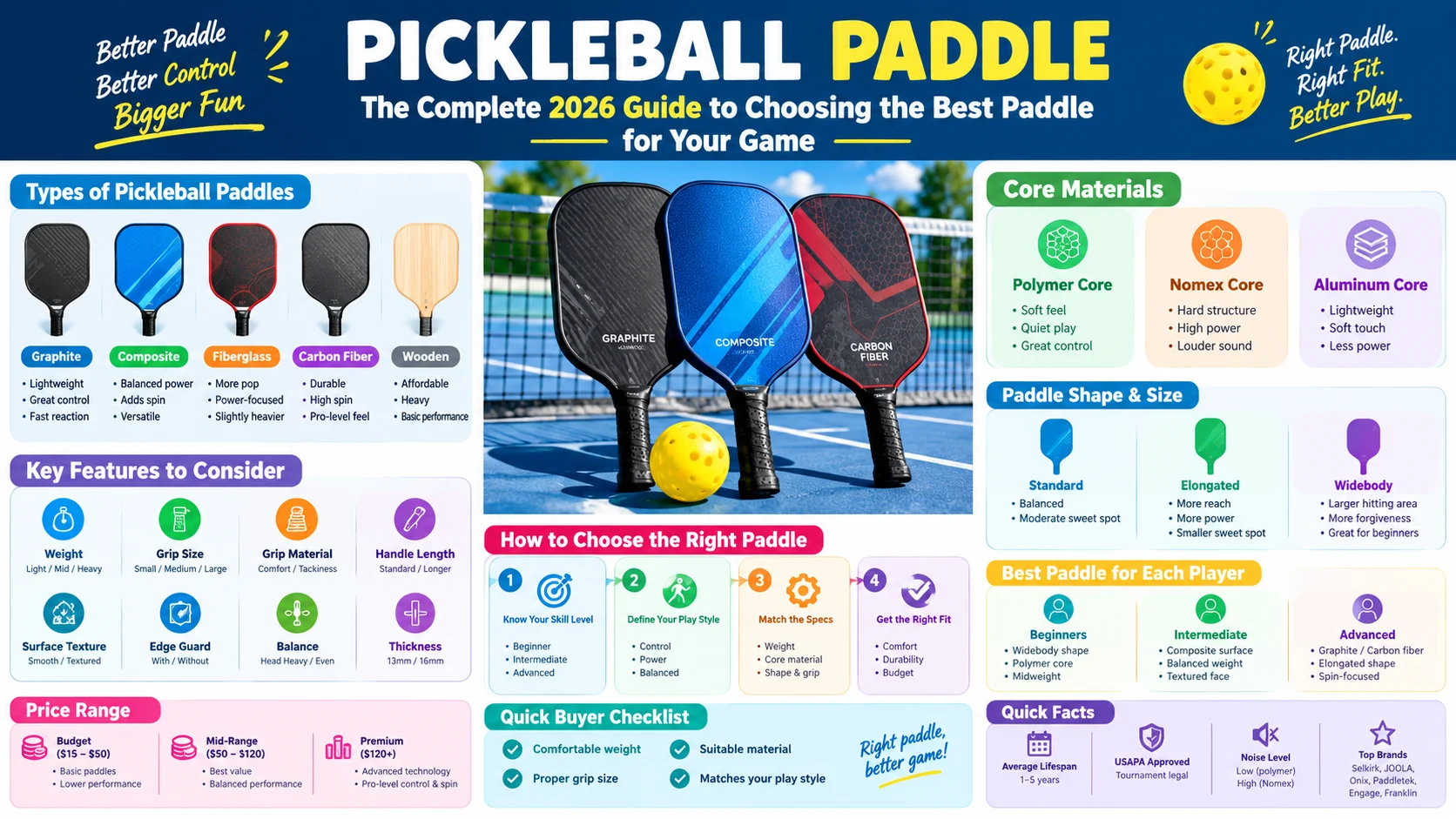
A pickleball paddle is a solid, perforation-free piece of equipment used to hit a plastic pickleball. It is typically made from materials like graphite, composite, or fiberglass, with an internal core such as polymer, Nomex, or aluminum. The right paddle depends on weight, grip size, shape, and playing style balancing power, control, and spin to match your skill level.
Pickleball looks simple at first glance. You grab a paddle, hit a plastic ball, and rally across a net. However, the paddle you choose quietly shapes every shot you make.
A poor paddle holds you back. A well-matched paddle unlocks precision, power, and confidence.
Let’s break everything down in a way that actually helps you play better.
What Is a Pickleball Paddle?
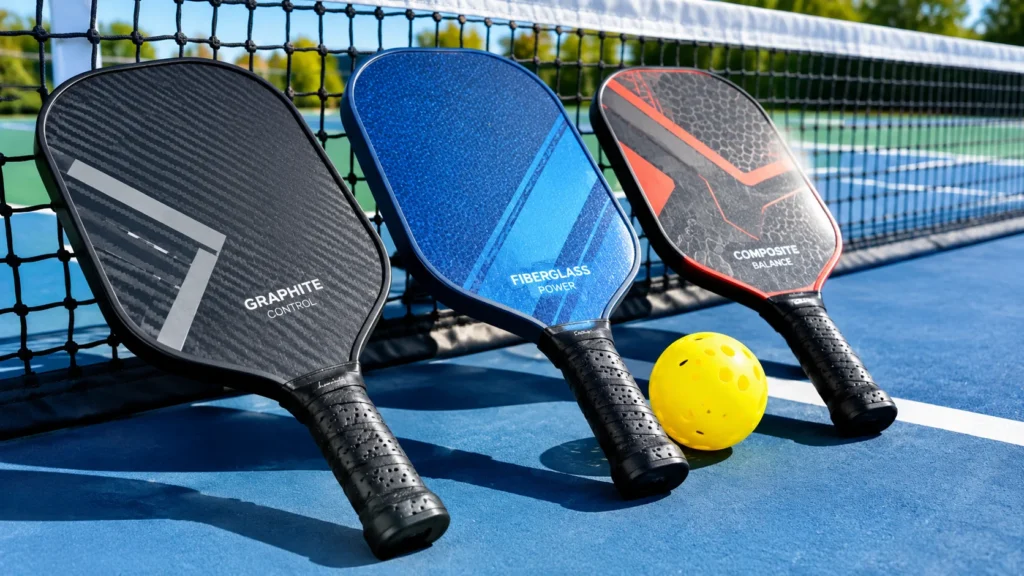
A pickleball paddle is a flat, solid hitting tool used in the sport of pickleball. Unlike a tennis racket, it has no strings. Unlike a ping-pong paddle, it’s larger and built for more force.
Think of it like this:
A pickleball paddle sits right between a tennis racket and a table tennis paddle combining control with power.
Quick Comparison
| Equipment | Size | Surface | Power Level |
|---|---|---|---|
| Tennis racket | Large | Strings | High |
| Pickleball paddle | Medium | Solid face | Balanced |
| Ping pong paddle | Small | Rubber | Low |
Why Your Pickleball Paddle Matters More Than You Think
Many beginners assume skill matters more than equipment. That’s only partly true.
Your paddle directly affects:
- Shot accuracy
- Reaction time
- Spin generation
- Arm fatigue
- Consistency
For example, a heavy paddle may give power. However, it can slow your reaction during fast rallies near the kitchen.
Anatomy of a Pickleball Paddle
Every paddle looks simple. Under the surface, it’s carefully engineered.
Key Parts Explained
- Face – The surface that hits the ball
- Core – Internal structure that controls feel and power
- Grip – Handle area for comfort and control
- Edge guard – Protective rim around the paddle
How Each Part Impacts Your Game
| Part | Role | Effect on Performance |
|---|---|---|
| Face | Ball contact | Spin, touch, control |
| Core | Internal support | Power, vibration feel |
| Grip | Handling | Comfort, wrist movement |
| Edge guard | Protection | Durability |
Types of Pickleball Paddles (Material Breakdown)
Material changes everything. It affects how the paddle feels the moment the ball hits.
Graphite Pickleball Paddle
Lightweight. Fast. Precise.
- Thin yet strong surface
- Excellent control
- Quick reaction speed
Best for players who rely on finesse and placement.
Composite Pickleball Paddle
Balanced and versatile.
- Textured surface for spin
- Mix of materials
- Great all-around performance
Ideal if you want both control and power without extremes.
Fiberglass Pickleball Paddle
Power-focused.
- Thicker face
- More pop on impact
- Slightly heavier feel
Great for aggressive players who like to drive shots.
Carbon Fiber Pickleball Paddle
Advanced performance.
- Extremely durable
- High spin potential
- Consistent feel
Often used by competitive players who demand precision.
Wooden Pickleball Paddle
Basic and affordable.
- Heavier than modern paddles
- Limited performance
- Very durable
Perfect for schools or casual beginners.
Core Materials: The Real Engine Inside the Paddle
The core is hidden. Yet, it determines how your paddle performs.
Polymer Core
Most popular choice.
- Soft feel
- Quiet play
- Excellent control
Used in modern high-quality paddles.
Nomex Core
Power-driven option.
- Hard structure
- Loud impact sound
- High energy return
Great for players who hit hard and fast.
Aluminum Core
Touch and finesse.
- Lightweight
- Soft feel
- Reduced power
Best for control players who value precision.
Core Comparison Table
| Core Type | Power | Control | Noise | Best Use Case |
|---|---|---|---|---|
| Polymer | Medium | High | Low | All-around players |
| Nomex | High | Medium | High | Aggressive hitters |
| Aluminum | Low | High | Low | Soft touch players |
Paddle Shape and Size
Shape changes how forgiving your paddle feels.
Standard Shape
- Balanced performance
- Moderate sweet spot
Elongated Pickleball Paddle
- Longer reach
- More power
- Smaller sweet spot
Perfect for experienced players.
Widebody Paddle
- Larger hitting area
- More forgiveness
- Better for beginners
Key Insight
A larger paddle increases forgiveness. A longer paddle increases reach and power.
Paddle Weight: The Most Important Decision
Weight influences nearly every shot.
Weight Categories
- Lightweight (6.5–7.2 oz)
Fast and easy to control - Midweight (7.3–8.4 oz)
Balanced and versatile - Heavyweight (8.5+ oz)
Strong power but slower swing
Real Example
A beginner often struggles with timing. A midweight paddle smooths out mistakes and offers stability.
Grip Size and Comfort
Grip is often ignored. That’s a mistake.
A wrong grip leads to poor control and even injury.
Grip Effects
- Small grip → more wrist movement → more spin
- Large grip → more stability → less strain
How to Choose Grip Size
Finger Test
- Hold the paddle
- Place your index finger between palm and fingers
- If it fits comfortably, the grip is correct
Surface Texture and Spin Control
Modern pickleball is evolving. Spin matters more than ever.
Smooth vs Textured Surface
| Surface Type | Spin Ability | Control |
|---|---|---|
| Smooth | Low | High |
| Textured | High | Medium |
Why Spin Matters
Spin changes how the ball behaves:
- Topspin drops faster
- Backspin slows the ball
- Sidespin confuses opponents
How to Choose the Best Pickleball Paddle
Choosing the right paddle doesn’t have to be confusing.
Step-by-Step Guide
Identify Your Skill Level
- Beginner → forgiveness matters
- Intermediate → balance matters
- Advanced → precision matters
Define Your Play Style
- Control player
- Power hitter
- Balanced player
Match Paddle Features
- Weight
- Core material
- Shape
- Grip size
Best Pickleball Paddle for Different Players
For Beginners
- Widebody shape
- Polymer core
- Midweight
For Intermediate Players
- Composite surface
- Balanced weight
- Textured face
For Advanced Players
- Graphite or carbon fiber
- Elongated shape
- Spin-focused surface
Common Mistakes When Buying a Pickleball Paddle
Avoid these errors if you want faster improvement.
- Choosing based only on price
- Ignoring grip size
- Buying a heavy paddle too early
- Not matching paddle to play style
Paddle Maintenance and Lifespan
Even the best paddle wears out.
Average Lifespan
- Casual players: 2–5 years
- Frequent players: 1–2 years
Signs You Need a New Paddle
- Dead spots
- Cracks
- Reduced control
- Strange vibrations
Care Tips
- Keep it dry
- Avoid extreme heat
- Clean surface regularly
Official Paddle Rules and Regulations
If you play competitively, rules matter.
Key Standards
- Maximum size: 24 inches combined length + width
- Solid surface required
- No trampoline effect
Price Breakdown: What You Really Get
Budget Range ($15–$50)
- Basic paddles
- Lower performance
Mid-Range ($50–$120)
- Best value
- Balanced performance
Premium ($120+)
- Advanced technology
- Pro-level control and spin
Quick Buyer Checklist
Before you buy, double-check this:
- ✔ Comfortable weight
- ✔ Proper grip size
- ✔ Suitable material
- ✔ Matches your play style
FAQs
What is the best pickleball paddle for beginners?
A midweight paddle with a polymer core and widebody shape offers the best balance.
Is graphite better than fiberglass?
Graphite offers better control. Fiberglass delivers more power.
What paddle weight is best?
Midweight paddles work best for most players.
Can a paddle improve your game?
Absolutely. The right paddle enhances consistency, control, and confidence.
Final Thoughts
Choosing the right pickleball paddle isn’t about chasing the most expensive option.
It’s about finding a tool that fits your hand, your swing and your style.
Small differences matter. A few ounces. A slight texture. A subtle grip change.
Those details turn average shots into winning ones.
Pick wisely. Play smarter.

Daniel Brooks is a sports writer at SportsOrbitX.com, specializing in football, basketball and global sports news. He focuses on delivering accurate reporting, match analysis and timely updates that keep fans informed.