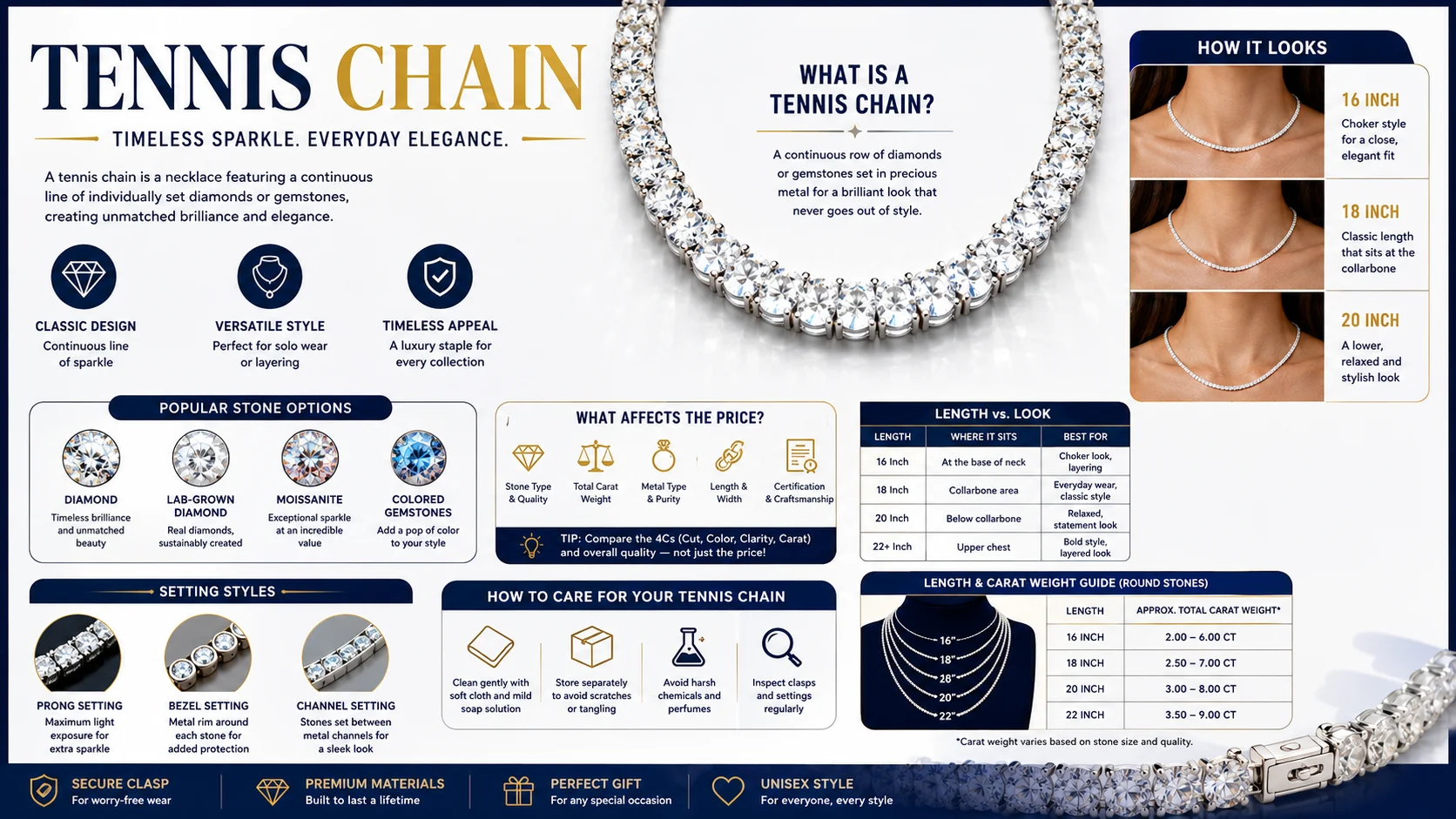
A tennis chain is a necklace made with a continuous row of individually set diamonds or gemstones, creating an uninterrupted line of sparkle around the neck. It is also commonly called a tennis necklace and is available in natural diamonds, lab-grown diamonds, moissanite, and other gemstones.
Tennis chains are popular because they can look luxurious on their own, layer easily with other necklaces, and work with both casual and formal outfits.
What Is a Tennis Chain?
A tennis chain is a jewelry necklace featuring closely spaced diamonds or gemstones set along the length of the piece. Unlike a traditional chain made from interconnected metal links, the stones are the visual focus, creating what many jewelry designers describe as a continuous or “river” of sparkle.
The classic version uses round brilliant diamonds, but modern tennis chains can feature different stone shapes, colors, sizes, and materials.
You may also see the terms tennis necklace, diamond tennis chain, and tennis diamond chain used for essentially the same style.
The design has become a jewelry staple because it delivers noticeable sparkle without requiring a large pendant or complicated design.
Why Is It Called a Tennis Chain?
The name comes from the history of the tennis bracelet, not from a particular type of chain construction.
The story became famous when tennis champion Chris Evert lost her diamond bracelet during a match at the U.S. Open and asked officials to pause play while she looked for it. The incident helped popularize the term “tennis bracelet.” GIA notes that the bracelet style itself existed before the incident and was traditionally known as a line bracelet.
The same continuous gemstone design later appeared in necklaces, leading to the commonly used term tennis necklace or tennis chain.
So, despite the athletic name, you do not need to play tennis to wear one.
Tennis Chain vs. Tennis Bracelet
The biggest difference is simply where the jewelry is worn.
| Feature | Tennis Chain | Tennis Bracelet |
|---|---|---|
| Worn on | Neck | Wrist |
| Main design | Continuous gemstone line | Continuous gemstone line |
| Common stones | Diamonds, lab diamonds, moissanite | Diamonds and gemstones |
| Popular metals | Gold, white gold, platinum | Gold, white gold, platinum |
| Styling | Solo or layered | Solo or stacked |
| Overall look | More visible statement | More subtle elegance |
The underlying design philosophy is similar: individually set stones connected into a flexible piece that creates continuous sparkle.
What Makes a Tennis Chain Different From a Regular Chain?
A regular gold chain gets most of its visual character from its metal links.
A tennis chain gets its visual impact primarily from the stones.
For example, a Cuban link chain uses interlocking metal links as its defining feature. A tennis chain instead creates a nearly uninterrupted line of gemstones.
That distinction is important when shopping because a tennis chain can look delicate in photographs while actually containing a substantial amount of gemstone and precious metal.
Types of Tennis Chains
There isn’t just one tennis chain design. The setting, stone shape, metal, and stone type can dramatically change the final appearance.
Diamond Tennis Chain
The traditional luxury choice is a diamond tennis chain.
Diamonds are popular because of their brilliance, durability, and classic appearance. GIA describes tennis jewelry as a continuous line of individually set diamonds or gemstones and notes that diamonds remain the classic choice.
A diamond tennis chain can be:
- Minimal and delicate
- Medium-width and versatile
- Bold and statement-making
- Made with natural or lab-grown diamonds
Lab-Grown Diamond Tennis Chain
Lab-grown diamonds have the same basic crystal structure as natural diamonds but are created in controlled laboratory environments.
They can be an attractive option for shoppers who want the appearance and physical properties of diamond while working with a different budget or preference.
When comparing lab-grown and natural diamond tennis chains, pay attention to the total carat weight, individual stone size, cut quality, color, clarity, metal, and setting rather than judging the necklace by its appearance alone.
Moissanite Tennis Chain
Moissanite tennis chains are popular with shoppers who want substantial sparkle at a different price point from traditional diamond jewelry.
Moissanite has strong brilliance and a distinctive appearance, making it particularly noticeable under direct lighting.
It should not, however, be marketed as a diamond substitute without clearly identifying the gemstone. A reputable seller should tell you exactly what stones are being used.
Gold Tennis Chain
The metal surrounding the stones can dramatically change the personality of the necklace.
Common choices include:
14K Gold
A practical option for frequent wear because it contains more alloy than 18K gold, generally making it harder than higher-karat gold.
18K Gold
A richer, higher-purity gold option with a more luxurious feel.
GIA identifies 18K gold and platinum among traditional precious-metal choices for tennis jewelry.
White Gold
White gold creates a bright, neutral background that can make white gemstones appear especially crisp.
Yellow Gold
Yellow gold produces a warmer, more traditional luxury appearance.
Platinum
Platinum is a premium choice known for its durability and naturally white appearance.
Popular Tennis Chain Stone Shapes
Round stones are the classic choice, but they are not your only option.
Round Brilliant
The safest choice if you want maximum classic sparkle. Round brilliant is one of the most popular cuts for tennis jewelry.
Princess Cut
Square-shaped stones create a sharper, more geometric appearance.
Emerald Cut
Emerald-cut stones produce a more understated, sophisticated look. Their long step facets emphasize clarity and depth rather than the intense sparkle associated with brilliant cuts.
Your choice should depend on whether you want maximum sparkle, modern geometry, or understated elegance.
How Long Should a Tennis Chain Be?
Length is one of the most important decisions because it determines where the necklace sits on your chest.
| Length | General Look |
|---|---|
| 14–16 inches | Close-fitting/choker appearance |
| 18 inches | Classic everyday length |
| 20 inches | Lower, more relaxed placement |
| 22–24 inches | Longer statement look |
An 18-inch tennis necklace generally sits around the collarbone area on many people, while shorter lengths create a closer-to-the-neck appearance.
Current tennis-necklace designs are commonly offered in lengths such as 16 and 18 inches, with 16 inches giving a closer placement and 18 inches providing a more traditional collarbone look.
The Best Length Depends on Your Style
Choose 16 inches if you want:
- A close-fitting look
- A choker-style appearance
- A necklace that works well with open necklines
Choose 18 inches if you want:
- An everyday necklace
- A classic collarbone position
- Easier layering with other chains
Choose 20 inches or longer if you prefer:
- A lower neckline
- More relaxed styling
- Layering with shorter necklaces
How Much Does a Tennis Chain Cost?
There is no single price for a tennis chain because the cost can vary dramatically.
The biggest factors are:
- Natural vs. lab-grown diamonds
- Total carat weight
- Individual stone size
- Cut quality
- Color
- Clarity
- Metal type
- Chain length
- Setting quality
- Brand and craftsmanship
GIA specifically notes that the price of tennis jewelry can vary widely according to gemstone quality, total carat weight, and the metal used.
That means two necklaces that look similar in an online photograph can have very different values.
Don’t Shop by Carat Weight Alone
A high total carat weight doesn’t automatically mean a better tennis chain.
A smart buyer should ask:
- What type of stone is it?
- What is the total carat weight?
- Are the stones individually graded?
- What is the color and clarity?
- What metal is used?
- What type of setting holds the stones?
- Does the necklace have a secure clasp?
What Setting Is Best for a Tennis Chain?
The setting controls how the gemstones are held in place and how much of each stone is exposed.
Prong Setting
Small metal prongs hold individual stones securely.
Advantages include:
- Strong light exposure
- Classic appearance
- Excellent sparkle
GIA identifies prong settings as one of the most popular choices for tennis jewelry because they allow significant light exposure.
Bezel Setting
A metal rim surrounds each stone.
It offers greater protection and a smooth appearance, making it appealing for people who prefer a more secure, streamlined design.
Channel Setting
Stones sit between parallel metal channels.
The result is a smooth surface with fewer protruding elements, giving the necklace a clean and contemporary appearance.
Can You Wear a Tennis Chain Every Day?
Yes, but “everyday jewelry” doesn’t mean “wear it during everything.”
A tennis chain can work beautifully as an everyday luxury piece, but activities that expose jewelry to impacts, chemicals, or excessive pulling can increase the chance of damage.
Before sleeping, exercising, swimming, or doing physical work, consider removing it.
The clasp deserves special attention. Because a tennis chain contains many individual stones, losing the necklace can be considerably more expensive than repairing a single-link chain.
For valuable tennis jewelry, periodic professional inspection is a smart precaution. GIA also recommends checking the clasp, safety components, and mountings on tennis bracelets regularly.
How to Clean a Tennis Chain
Regular cleaning keeps the stones looking bright, but aggressive cleaning can damage delicate settings.
For routine care:
- Use a soft jewelry cloth.
- Clean gently with appropriate jewelry-cleaning methods.
- Avoid harsh household chemicals.
- Don’t pull or bend the necklace aggressively.
- Store it separately to reduce scratching and tangling.
- Have valuable pieces professionally inspected periodically.
If you’re unsure about the correct cleaning method, ask a qualified jeweler rather than experimenting with strong chemicals.
How to Buy a Tennis Chain Without Overpaying
The smartest approach is to compare specifications, not just photographs.
Before buying, check the following:
1. Stone Type
Confirm whether you’re buying natural diamonds, lab-grown diamonds, moissanite, or another gemstone.
2. Total Carat Weight
Compare the total amount of gemstone across similar lengths.
3. Metal Purity
Look for clearly stated metal information such as 14K, 18K, or platinum.
4. Setting
Inspect how the stones are secured.
5. Clasp
A secure clasp is essential for a necklace containing valuable stones.
6. Certification or Documentation
For significant diamond purchases, ask what grading documentation is provided. GIA notes that grading reports can provide independent information about diamond characteristics and authenticity.
7. Return Policy
Never overlook this when buying expensive jewelry online.
A detailed return policy gives you an opportunity to inspect the necklace properly after receiving it.
Is a Tennis Chain Worth It?
For the right buyer, absolutely.
A tennis chain has an unusual advantage: it can look luxurious without relying on a large pendant or oversized logo.
A simple tennis necklace can work with:
- T-shirts
- Button-down shirts
- Dresses
- Suits
- Evening wear
- Layered necklace combinations
That versatility is one reason the style has remained popular for decades.
The key is buying quality appropriate to your budget rather than stretching financially just to obtain a larger-looking necklace.
FAQs
What is a tennis chain?
A tennis chain is a necklace featuring a continuous row of individually set diamonds or gemstones. It is also commonly called a tennis necklace.
Why are tennis chains so popular?
They offer continuous sparkle, a clean silhouette, and exceptional versatility. A tennis chain can be worn alone or layered with other necklaces.
Is a tennis chain the same as a tennis necklace?
Generally, yes. The terms are commonly used interchangeably to describe the same continuous gemstone necklace style.
Is a tennis chain only for women?
No. Tennis chains are worn by people of all genders. The ideal width, length, stone size, and metal color depend on personal style.
Can men wear a tennis chain?
Absolutely. Men’s tennis chains are often styled with larger stones, wider profiles, or longer lengths, but there are no strict rules.
What is the best length for a tennis chain?
For many people, 18 inches is the most versatile starting point because it generally sits around the collarbone. A shorter or longer length may be better depending on your preferred look.
Are tennis chains made with real diamonds?
They can be. However, not every tennis chain uses natural diamonds. Some use lab-grown diamonds, moissanite, or other gemstones. Always check the product specifications.
What is better: diamond or moissanite tennis chain?
Neither is automatically better. Diamond is the traditional luxury choice, while moissanite offers a different visual character and price proposition. Choose according to your priorities and budget.
Can you sleep with a tennis chain on?
It’s generally safer to remove valuable or delicate jewelry before sleeping because repeated pressure and movement can stress settings and clasps.
How do I keep a tennis chain from breaking?
Choose a well-made piece with a secure clasp and strong settings, avoid unnecessary pulling or impact, and have valuable jewelry inspected periodically.
Final Verdict
A tennis chain is more than a sparkling necklace. Its appeal comes from a remarkably simple idea: place individual gemstones close together along a flexible setting and let the continuous line of light become the design.
If you’re buying your first one, don’t start with the biggest carat number or the most expensive price tag. Start with stone type, length, setting, metal, craftsmanship, and security. An 18-inch tennis chain with a clean setting and appropriate stone quality can be far more versatile than an oversized piece that doesn’t suit your wardrobe or lifestyle.
For a classic look, round brilliant stones remain the safest choice. For a modern appearance, princess or emerald cuts offer something different. And if natural diamonds are outside your preferred budget, lab-grown diamonds or moissanite can provide alternative ways to achieve the tennis-chain aesthetic.
Ultimately, the best tennis chain is the one that gives you the look you want, fits comfortably, is built securely, and makes sense for your budgetnot simply the one with the most sparkle in a product photograph.

Emily Parker is a sports journalist at SportsOrbitX.com with a passion for covering cricket, tennis and major international sporting events. She is committed to producing clear, reliable and engaging content for sports enthusiasts worldwide.