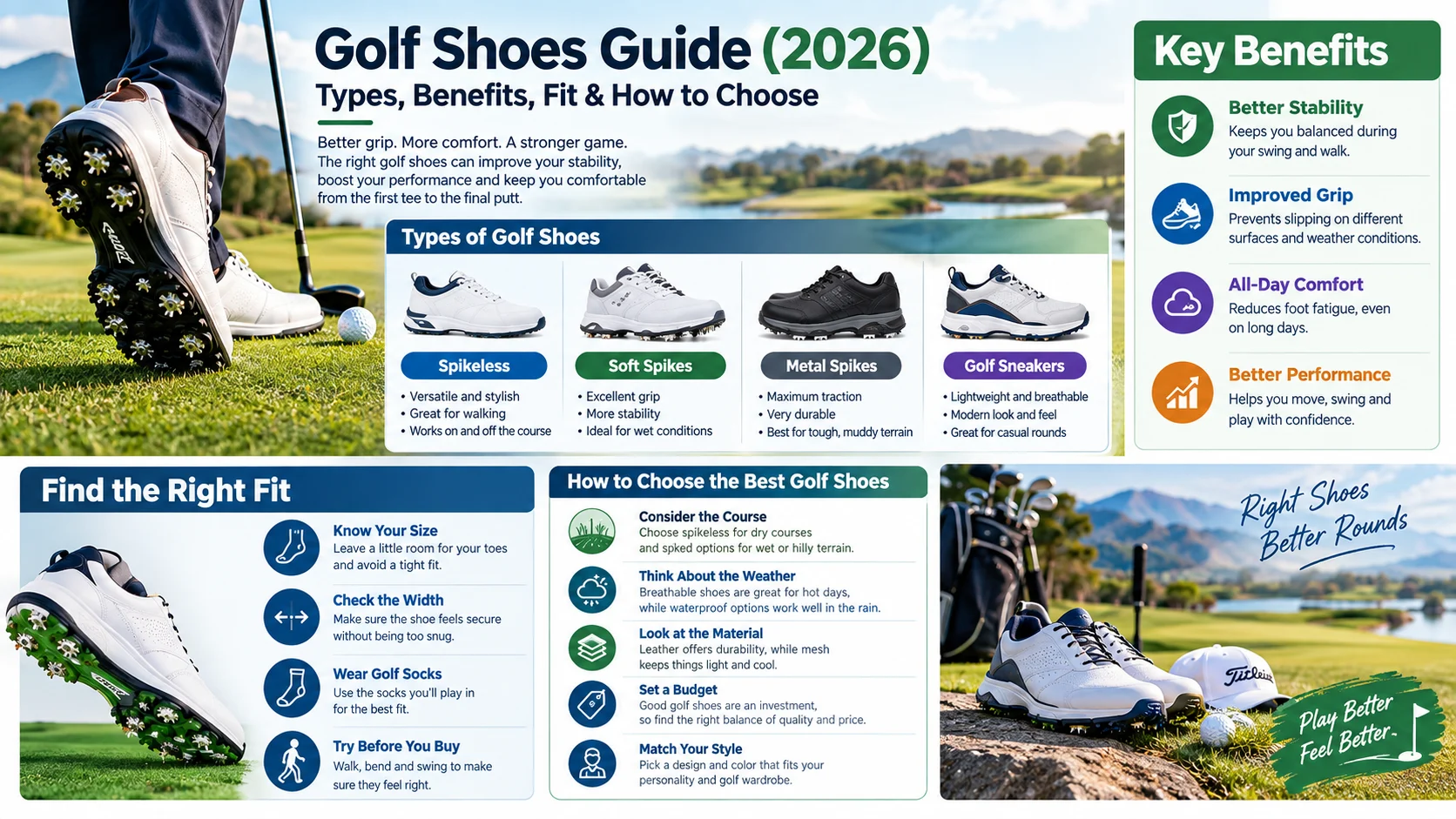
Golf shoes are designed to give golfers the traction, stability, comfort, and support needed to swing confidently while walking the course. The right pair can help you maintain balance during the swing, handle wet or uneven turf, and stay comfortable through 18 holes.
What Are Golf Shoes?
Golf shoes are specialized footwear designed specifically for playing golf. Unlike ordinary sneakers, they are built around the demands of the golf swing, particularly traction, lateral stability, waterproofing, and walking comfort.
A typical golf shoe may feature:
- Specialized traction patterns or replaceable spikes
- A stable outsole
- Waterproof or water-resistant materials
- Cushioning for long-distance walking
- A supportive upper that helps keep the foot secure
- A wider or structured base for swing stability
Golf shoes are available in several styles, but the biggest choice is usually between spiked and spikeless golf shoes.
Why Do Golfers Wear Golf Shoes?
Golf swings generate significant rotational and lateral forces. Your feet provide the foundation for that movement, so slipping or excessive foot movement can make it harder to maintain a consistent swing.
Golf shoes are designed to provide:
| Feature | Why It Matters |
|---|---|
| Traction | Helps prevent slipping during the swing |
| Stability | Keeps the feet grounded through rotation |
| Cushioning | Reduces fatigue during long rounds |
| Waterproofing | Helps keep feet dry in wet conditions |
| Support | Provides a secure, comfortable fit |
| Flexibility | Makes walking between shots easier |
The goal isn’t simply to make the shoe more aggressive. A good golf shoe should provide enough grip for the swing without becoming uncomfortable while walking.
Spiked vs Spikeless Golf Shoes
The choice between spiked and spikeless shoes depends largely on the conditions you play in and how much traction you want.
Spiked Golf Shoes
Spiked golf shoes use dedicated cleats, commonly called soft spikes, on the outsole.
They generally provide strong traction and are particularly useful for golfers who regularly play in:
- Wet conditions
- Hilly courses
- Soft turf
- Early-morning rounds
- Courses where maximum grip is important
Modern soft spikes are designed to provide traction without the aggressive metal spikes used in some older golf footwear.
Spikeless Golf Shoes
Spikeless golf shoes use molded traction elements built directly into the outsole.
Their major advantage is versatility. Many spikeless designs can be worn comfortably around the clubhouse, driving range, and sometimes even away from the course.
They are especially attractive to golfers who prioritize:
- Walking comfort
- Lightweight construction
- Versatility
- Casual styling
- Easy maintenance
Spiked vs Spikeless: Which Should You Choose?
| Factor | Spiked | Spikeless |
|---|---|---|
| Traction | Excellent | Very good to excellent |
| Wet turf | Excellent | Good to very good |
| Walking comfort | Very good | Excellent |
| Versatility | Lower | Higher |
| Course use | Excellent | Excellent |
| Casual wear | Usually limited | Often easier |
| Maintenance | Spike replacement may be needed | Usually simpler |
Neither design is automatically right for every golfer. Course conditions, walking habits, fit, and personal preference matter more than the label.
Waterproof Golf Shoes: Are They Worth It?
For golfers who play in changing weather or early-morning conditions, waterproof golf shoes can be extremely useful.
Wet grass can quickly soak ordinary athletic shoes. Waterproof golf shoes typically use a water-resistant upper, waterproof membrane, or sealed construction to help keep moisture away from the feet.
However, waterproofing can sometimes affect breathability.
For hot and dry conditions, a lightweight, breathable shoe may be more comfortable. For wet conditions, waterproofing becomes much more valuable.
Waterproof vs Breathable Golf Shoes
Choose waterproof shoes if you regularly play:
- In rainy weather
- On wet courses
- Early in the morning
- During cooler seasons
Choose highly breathable shoes if you mainly play:
- In hot weather
- On dry courses
- In consistently warm climates
For golfers who play year-round, having one breathable pair and one waterproof pair can be more practical than expecting one shoe to perform perfectly in every condition.
How Should Golf Shoes Fit?
Golf shoes should feel secure without squeezing your feet.
Your heel should stay relatively stable when walking, while your toes should have enough room to move naturally.
A good golf shoe fit should provide:
- Secure heel hold
- Comfortable midfoot support
- Enough toe room
- No painful pressure points
- Minimal foot movement inside the shoe
Try golf shoes with the same type of socks you normally wear on the course.
It’s also worth trying shoes later in the day because feet can swell slightly after hours of activity.
How Much Room Should Be in Golf Shoes?
You generally want enough space in front of the longest toe to avoid contact with the end of the shoe while walking downhill.
Too much room can allow your foot to slide inside the shoe, while too little can create pressure and discomfort.
The ideal fit is secure, not restrictive.
What Makes a Good Golf Shoe?
A high-quality golf shoe usually balances four important characteristics:
1. Traction
Traction helps keep your feet connected to the ground during the golf swing.
Look for an outsole designed for the turf conditions you commonly encounter.
2. Stability
Golf shoes should resist excessive side-to-side movement while allowing your feet to move naturally during the swing.
A stable shoe doesn’t necessarily have to feel stiff.
3. Comfort
A round of golf can involve several hours of standing and walking. Cushioning, weight, and fit can make a major difference.
4. Weather Protection
If you regularly play in wet conditions, water resistance or waterproofing may be more important than having the lightest possible shoe.
Golf Shoes vs Regular Sneakers
Can you play golf in regular sneakers?
Yes, particularly for casual practice or a relaxed round, but sneakers aren’t specifically designed for the demands of a golf swing.
| Feature | Golf Shoes | Regular Sneakers |
|---|---|---|
| Golf-specific traction | Yes | Usually no |
| Swing stability | Designed for golf | General-purpose |
| Turf grip | Specialized | Variable |
| Waterproof options | Common | Varies |
| Walking comfort | Designed for course use | Often good |
| Casual versatility | Depends on design | Usually high |
If you’re playing regularly, dedicated golf shoes can provide a more appropriate combination of traction, stability, and course comfort.
Best Golf Shoes for Walking 18 Holes
If you walk the course rather than ride in a cart, comfort becomes a major buying factor.
Look for:
- Lightweight construction
- Good cushioning
- Comfortable heel support
- Flexible forefoot
- Breathable materials
- Reliable traction
- Proper fit
Don’t choose a golf shoe solely because it looks athletic or has aggressive traction.
A shoe that grips exceptionally well but causes foot pain after 12 holes isn’t a good solution for a walking golfer.
Golf Shoes for Beginners
Beginners don’t necessarily need the most expensive golf shoes.
A good starter pair should provide:
- Reliable traction
- Comfortable fit
- Adequate stability
- Weather protection appropriate for your course
- Durable construction
For many new golfers, comfortable spikeless golf shoes are a practical starting point because they combine course performance with everyday versatility.
If you frequently play on wet or hilly courses, however, a spiked model may make more sense.
Golf Shoes for Men vs Women
The fundamental purpose of golf shoes is the same for men and women: traction, stability, comfort, and support.
The main differences are usually related to:
- Foot shape
- Sizing
- Width options
- Upper construction
- Fit geometry
- Styling
Women’s golf shoes aren’t simply smaller versions of men’s shoes. Proper shape and fit are important because an incorrectly sized shoe can affect comfort and stability regardless of gender.
How Much Do Golf Shoes Cost?
Golf shoe prices vary considerably depending on construction, materials, waterproofing, traction technology, and brand.
Rather than choosing based solely on price, consider how often you play.
Occasional Golfer
Prioritize comfort, basic traction, and versatility.
Regular Golfer
Look for stronger durability, better cushioning, and reliable weather protection.
Frequent or Competitive Golfer
Pay closer attention to fit, stability, traction, weight, waterproofing, and outsole performance.
The most expensive shoe isn’t automatically the best choice for every player.
How to Choose the Right Golf Shoes
Use this simple checklist before buying.
Step 1: Decide Between Spiked and Spikeless
Choose based on your course conditions, traction needs, and walking preferences.
Step 2: Consider Your Weather
Wet courses make waterproofing more valuable. Hot conditions increase the importance of breathability.
Step 3: Think About How You Play
If you walk 18 holes regularly, comfort and weight should be high priorities.
Step 4: Check the Fit
Your heel should feel secure, your midfoot supported, and your toes comfortable.
Step 5: Look at the Outsole
Don’t judge traction solely by appearance. Consider the type of turf and conditions where you’ll play.
Step 6: Consider Durability
Frequent golfers should look for strong construction and materials that can handle repeated exposure to grass, moisture, dirt, and walking.
Common Golf Shoe Mistakes
Buying Only for Appearance
A stylish shoe isn’t useful if it doesn’t fit correctly or provide enough traction.
Choosing the Wrong Size
Even an excellent golf shoe can become uncomfortable when the fit is wrong.
Ignoring Weather
A breathable summer shoe may struggle on a wet morning course.
Overlooking Walking Comfort
Golf can involve several miles of walking. Don’t treat the shoe like a piece of equipment that only matters during the swing.
Assuming More Grip Is Always Better
Maximum traction isn’t the only goal. Golf shoes need to provide grip while still allowing natural movement and comfortable walking.
How to Take Care of Golf Shoes
Proper care can extend the life of your shoes.
After playing:
- Remove grass and dirt from the outsole.
- Let wet shoes dry naturally.
- Avoid excessive direct heat.
- Clean mud before it hardens.
- Replace worn spikes when necessary.
- Store shoes in a dry, ventilated area.
- Follow the manufacturer’s cleaning instructions.
If your golf shoes become soaked, don’t immediately place them against a heater. Gradual drying is generally safer for the materials.
Frequently Asked Questions
Are golf shoes really necessary?
They aren’t absolutely necessary for every casual golfer, but dedicated golf shoes provide specialized traction and stability that ordinary sneakers may not.
Can you wear golf shoes casually?
Some spikeless golf shoes are designed with casual, sneaker-like styling and can be worn away from the course. Check the manufacturer’s recommendations for the specific model.
Are spikeless golf shoes better than spiked shoes?
Neither is universally better. Spiked shoes can provide strong traction in demanding conditions, while spikeless shoes often offer greater versatility and walking comfort.
Are golf shoes waterproof?
Some are waterproof, while others are water-resistant or highly breathable. Check the shoe’s specifications rather than assuming every golf shoe provides the same protection.
Can you play golf in running shoes?
You can, particularly for casual play, but running shoes aren’t designed specifically for golf-course traction and swing stability.
Should golf shoes be tight?
Golf shoes should feel secure but shouldn’t be painfully tight. Your heel should stay stable while your toes need enough room for comfortable movement.
How long do golf shoes last?
Lifespan depends on how often you play, walking versus riding, course conditions, maintenance, and construction quality. Frequent golfers may wear through shoes considerably faster than occasional players.
Final Thoughts
The best golf shoes are not necessarily the most expensive, lightest, or most aggressive-looking pair. They are the shoes that fit your feet properly, provide dependable traction, support your swing, and remain comfortable throughout the round.
For most golfers, the decision starts with three questions:
Do you need maximum traction? Consider spiked shoes.
Do you want versatility and easy walking? Consider spikeless shoes.
Do you regularly play in wet conditions? Prioritize waterproofing.
Get those fundamentals right, and your golf shoes become more than just another piece of golf equipment they become the foundation beneath every swing and every step around the course.

Emily Parker is a sports journalist at SportsOrbitX.com with a passion for covering cricket, tennis and major international sporting events. She is committed to producing clear, reliable and engaging content for sports enthusiasts worldwide.